
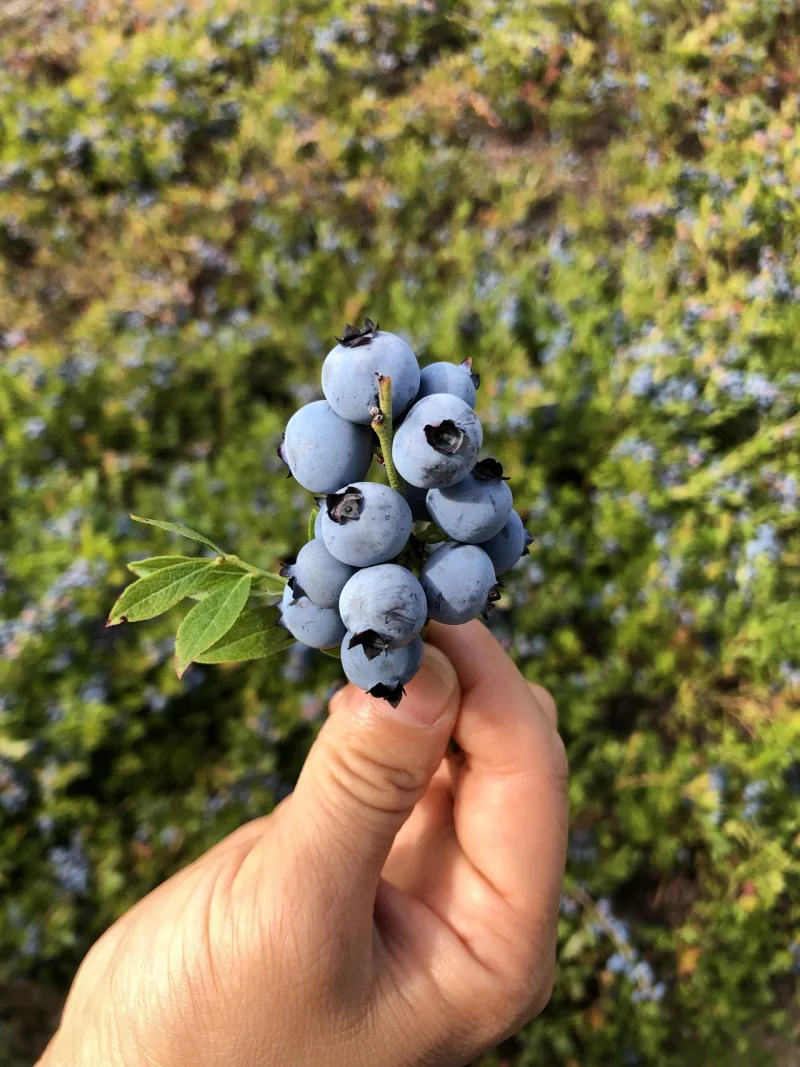
What wild really means.
“Wild” is an easy word to put on a bottle. With this berry, it has a particular meaning.
Lowbush wild blueberries are native plants. In the commercial landscapes of eastern Canada and Maine, growers work with plants that have established themselves naturally. The field begins with the berry already there.
Much of the story is below your feet.
Beneath the visible stems, rhizomes spread through the soil. These underground stems give rise to new shoots and allow a plant to form a patch.
That is why a wild-blueberry field can look like a mosaic. A patch of one shade sits beside a patch of another. Fruit can differ in shape, size, ripening and flavour across the same landscape.
From a distance, you see a field. Closer up, you discover many small identities within it.
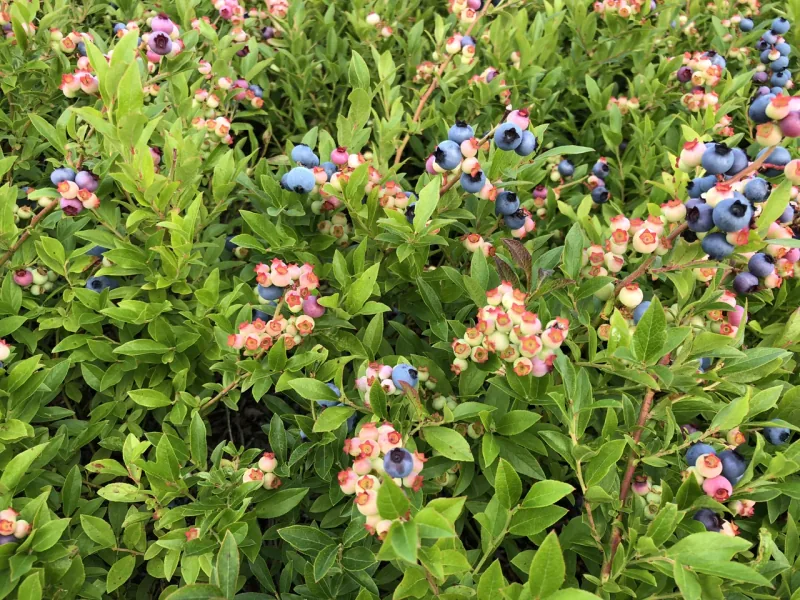
Wild is a relationship with the field.
Commercial growers tend these native plants with knowledge, equipment and close attention. Pruning supports renewal. Pollination helps the flowers set fruit. Harvesting asks for timing and care.
The berry remains wild in origin and growth. The harvest is the result of people understanding the crop and managing the landscape around it.
That combination matters to Jus Nova: a distinctive fruit, a specific growing region and the work that brings the two into a bottle.