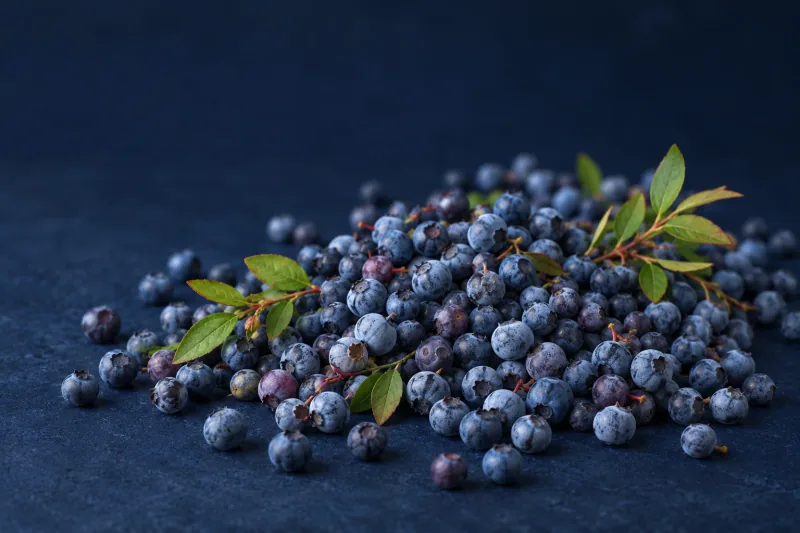
A cluster of small wild blueberries with green leaves on a deep navy surface.

There is more to blue.

Wild blueberries have attracted sustained scientific interest because of their naturally occurring plant compounds, particularly anthocyanins.

Researchers are asking how blueberry foods and drinks relate to memory, blood-vessel function and metabolism, and what happens to berry compounds after we consume them. This is where we explore the questions, the experiments and the findings.

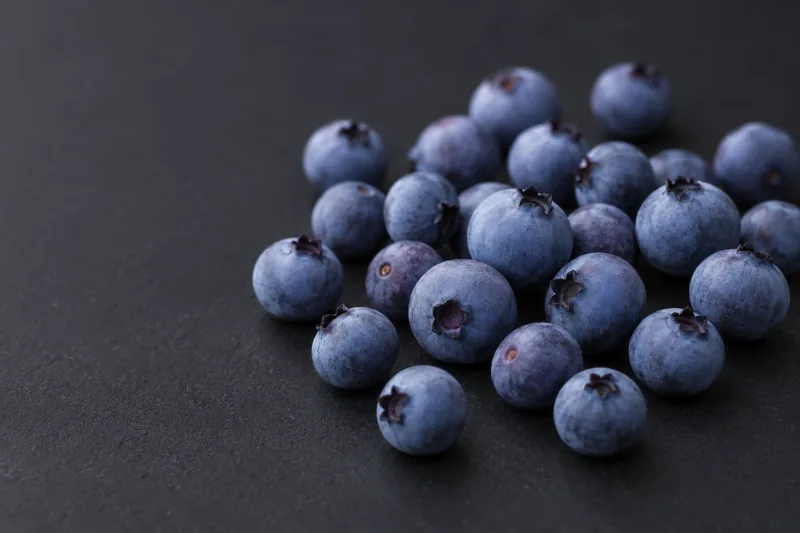
A loose group of small blue-violet wild blueberries with smooth powdery bloom, varied orientations and delicate calyces on a dark studio surface.

Meet the pigments behind the colour.

Anthocyanins belong to the flavonoid family of plant compounds. They contribute red, purple and blue colours to many fruits, including wild blueberries.

Their colour is easy to see. Their behaviour is a more interesting story: digestion changes these compounds, and scientists investigate the resulting metabolites as well as the pigments themselves.

This is why the research reaches beyond a simple antioxidant score. It asks how food and its compounds interact with the body.

Big names. Familiar foods.

From a cup of tea to a handful of blueberries, these plant compounds are already part of everyday life. The names describe families within families: polyphenols include flavonoids, and flavonoids include anthocyanins.

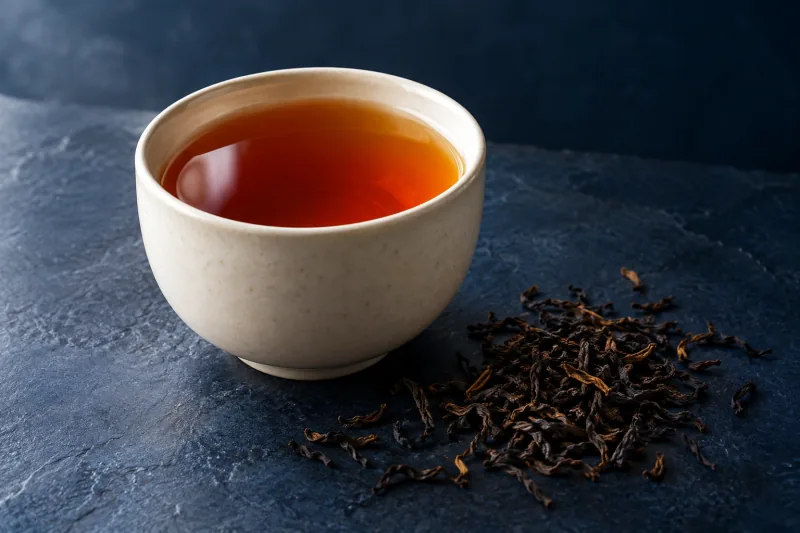
Amber tea in a ceramic cup beside loose tea leaves on a navy surface.

Polyphenols

Think of your cup of tea.

A large family of natural plant compounds found in foods such as tea, berries and cocoa. They help give plants their colour and flavour.

Why the interest?

Scientists study how they interact with our cells and gut microbes, and what that could mean for long-term health.
Polyphenols & gut research
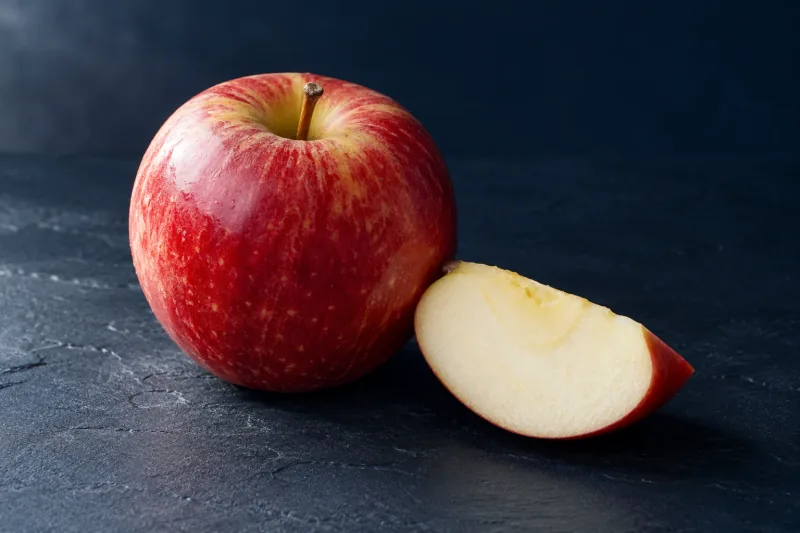
A red apple and a fresh apple wedge on a navy surface.

Flavonoids

Think of a crisp apple.

One group within the polyphenol family. Apples, tea and berries all contain them—so you may already enjoy them every day.

Why the interest?

Researchers study their possible role in heart health, including how well blood vessels relax and carry blood.

Flavonoids & blood-vessel research
A cluster of small wild blueberries with green leaves on a deep navy surface.

Anthocyanins

Think of a blueberry’s blue.

A colourful group of flavonoids. These natural pigments give blueberries—and foods such as red cabbage—their red, purple and blue shades.

Why the interest?

Blueberry studies explore memory and blood-vessel function. The colour is easy to see; its relationship with health is still being investigated.

Explore the story of the blue

The questions researchers are asking.

Brain and cognition — how do blueberry foods relate to particular measures of memory, attention and executive function across different ages?

Heart and circulation — can interventions change how blood vessels respond, or alter blood-pressure measurements?

Metabolic health — how do blueberry foods and their compounds interact with glucose regulation and other metabolic processes?

Gut and metabolites — how do gut microbes transform berry compounds, and how might those transformations relate to responses elsewhere in the body?

Memory

Wild-blueberry juice and memory: an early human study.

Krikorian et al. · 2010

Participants
9 adults with early memory changes
Studied format
Wild-blueberry juice
Time frame
12 weeks

In 2010, Robert Krikorian, Wilhelmina Kalt and colleagues reported a preliminary study in nine older adults experiencing early memory changes. Participants drank wild-blueberry juice daily for 12 weeks.

Paired-associate learning and word-list recall improved from baseline. Comparison with a small placebo group from a companion trial supported the paired-associate result; the word-list comparison was not statistically significant.

The study gave later researchers a concrete reason to investigate further, using larger samples and controlled designs.

Memory & attention

Looking at memory and attention in children.

Whyte et al. · 2016

Participants
21 children aged 7–10
Studied format
Powder-based drink
Time frame
Testing over 6 hours

Whyte and colleagues studied 21 children aged 7–10 using drinks containing 15 g or 30 g of freeze-dried wild-blueberry powder, alongside a placebo, in a double-blind crossover trial.

Published in 2016, the study reported benefits on some memory and demanding attention measures over the following six hours. The outcomes concerned particular tests performed under study conditions.

Blood-vessel function

A longer look at blood-vessel function.

Wood et al. · 2023

Participants
61 healthy adults aged 65–80
Studied format
26 g freeze-dried powder daily
Time frame
12 weeks

A 2023 trial led by Eleanor Wood and colleagues enrolled 61 healthy adults aged 65–80. Participants received 26 g of freeze-dried wild-blueberry powder or a matched placebo daily for 12 weeks.

The wild-blueberry group showed improved flow-mediated dilation, a measure of blood-vessel response, and lower 24-hour systolic blood pressure compared with placebo. The study found no change in measured cerebral blood flow or gut microbiota composition.

Vascular response

Different people. A different result.

Rendine et al. · 2026

Participants
20 healthy young adults
Studied format
300 mL wild-blueberry drink
Time frame
Short-term crossover trial

In a 2026 crossover trial, Rendine and colleagues tested a 300 mL wild-blueberry drink and a placebo in 20 healthy young adults.

The trial found no significant overall treatment effect on the vascular-function and circulating adhesion markers it measured. Read alongside longer studies in older adults, it shows why population, timing and the measurement itself are central to the research story.

A field of research that keeps growing.

The Wild Blueberry Association of North America has supported research and scientific exchange for decades. The Bar Harbor research meetings brought scientists together across neuroscience, aging, cardiovascular and other fields.

WBANA’s research libraries offer routes into individual papers and broader themes. Start with the question that interests you, then read what was tested and what the researchers found.